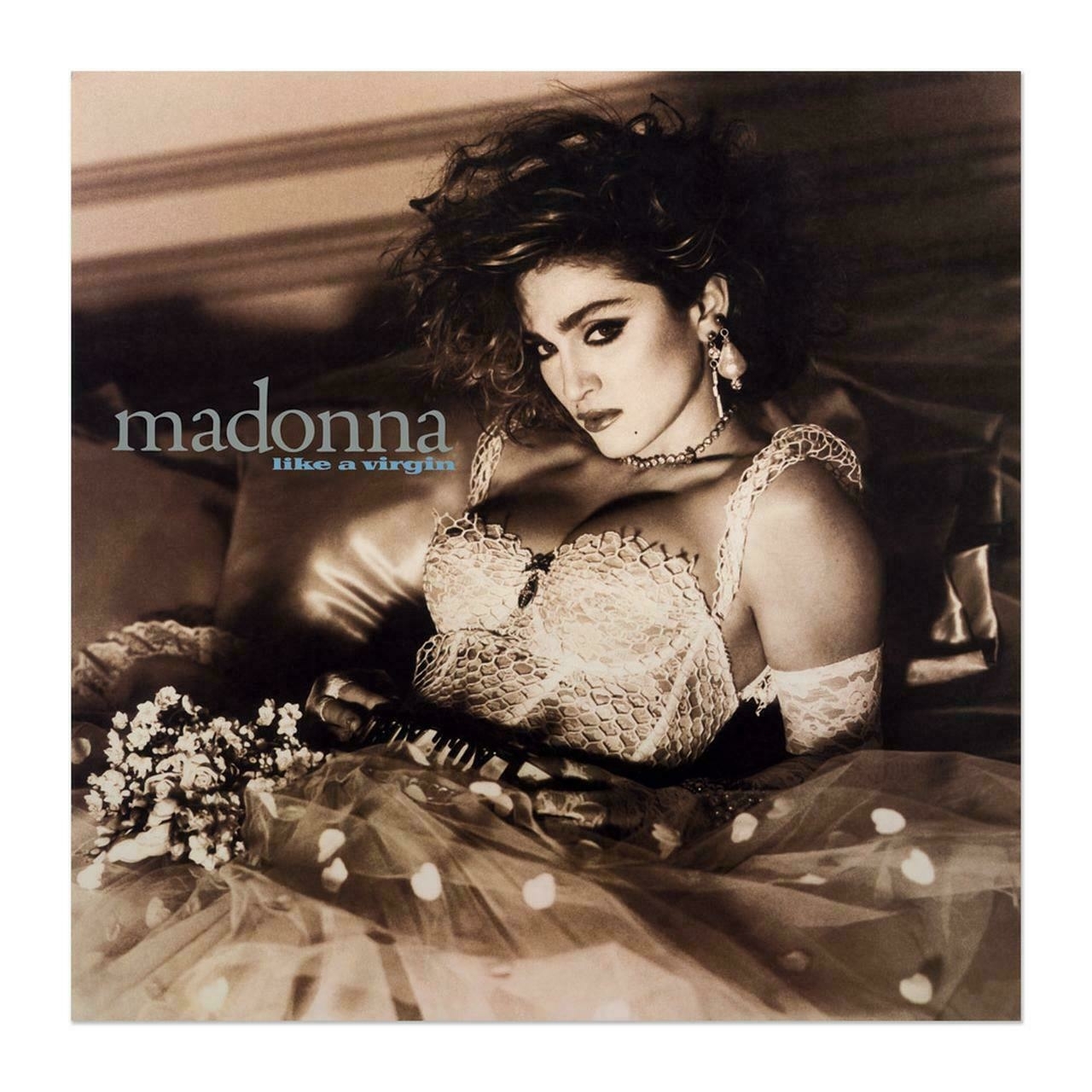
Like A Virgin

Madonna’s most well-known album, Like A Virgin just celebrated its 40th anniversary.

Like A Virgin was the first record I owned, given to me by my parents for my 9th birthday. The subject might have been a bit mature for me at that age, but it hardly mattered because I promptly broke the stylus on the family turntable. I couldn’t even listen to my gift. Of course, the hit songs from the record were all over commercial radio, anyway, so it wasn’t like Madonna’s tunes were hiding in obscurity.

Roon Audio has a new feature that should delight headphone lovers — OPRA (Open Profiles for Revealing Audio). OPRA is an open-source repository hosted on GitHub that contains precisely crafted headphone curves for different headphone models (and you get an equalizer, and you get an equalizer…).

I love Roon, although I’ve had my share of technical challenges — today I need to bring up two issues on the Roon Community forum. The ability of the platform to continuously innovate ways to give audio enthusiasts a better experience is impressive.

For my money, Garrison Keillor does the gratitude thing about as eloquently as one possibly could.

I sit and stare at the screen watching men crash into each other and I’m grateful for cowardice: I never played football so now I don’t have the aches and pains that my heroic classmates have. I fooled around with drugs in college but they were cheap crummy drugs, not the powerful chemicals of today that lead a person to make a life sleeping in the park. I’m grateful that I was born late enough so that when I developed mitral valve problems, open-heart surgery was rather common so I didn’t die in my late 50s as two of my uncles did.

I need to get on his level of thankfulness.

Our town’s only movie theater just closed. I wasn’t a regular, but my son was.

Sam Tornow writes about Thurston Moore and The Smell of Vinyl for Discogs. Moore is a famous vinyl aficionado who stuffs his apartment with records.

“I kind of have to draw some limitations with my responsibility toward my own budget. I can’t just be living, building furniture out of records. I [still] have a pretty healthy Wantlist on Discogs, though. I continue to buy records all the time. I’m always interested in going to record stores, and I get my Discogs alerts for records I want. I would say I purchase on Discogs at least two or three times a week.”

This happened to a friend of mine, who was once named by the News & Observer as the biggest record collector in Raleigh. He eventually ran out of space for his collection and moved on to clothing.

I found the position Moore now takes on CDs interesting. 

Originally sticking to vinyl and cassettes, CDs have also made their way into his collection. At first he was apprehensive of the medium when it initially exploded in popularity, but now he thinks they aged well.

This sounds a lot like the conclusion I have come to. With the right DAC, CDs can sound fantastic. The most recent CD I was looking at (an upcoming Pains of Being Pure At Heart collection) was also half the price of the record. That’s hard to beat, especially if you’re on a budget.

Just finished reading Shogun - Part 1 by James Clavell 📚. I don’t want to sound like a snob and say the book was better than the show. Especially because the show was amazing. The novel did have some differences, though, and a bit more of the political machinations.

David Saavadra writes for El País about the rise and fall of the Stone Roses, a band many had pegged as the saviors of britpop at the end of the 80s.

Why did U.K. music critics place so much hope in them in the late 1980s? “Everything was exaggerated, because it was a time when the media was looking for someone to occupy the throne that the Smiths had left vacant,” notes music critic Carlos Pérez de Ziriza. “They had the merit of fusing, like no other group, the British pop heritage of the 1960s and its most exquisite melodic tradition with the new rhythms emanating from Manchester, favoured by the rise of rave culture, acid house, and that new lysergia that had driven the second summer of love, that of 1988.”

The Stone Roses, perhaps most notably, at this point, were a huge influence on Oasis, in style as well as substance. Of course, my link to the article isn’t anything less than encouragement to read it, but if you want to save a click, the downfall of the band can be mostly attributed to old-fashioned rockstar hubris.

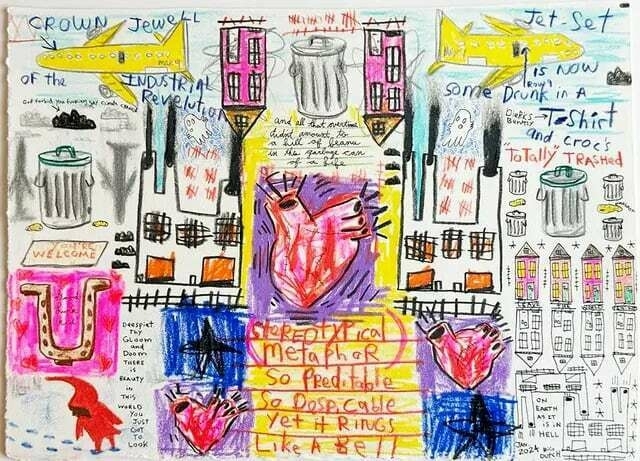
Austin Kleon has a post on Dave “Big Dutch” Nally, whose deceptively amateurish art looks like a cross between something that would have been created by Daniel Johnston and the liner notes of a Pavement record.

I especially love the reference to Ezra Jack Keats' exquisite children’s book The Snowy Day (bottom left).