When I first heard about Arc, from the Browser Company, I thought, who would want to get in the browser game? It seems like there are enough Chrome-based browsers on the market to suit any internet lifestyle. I was fortunate enough to get an invitation to their private beta, though, after mentioning my interest in checking it out. Now that I'm using it, I think I understand where the Browser Company is trying to go with their new offering.
The browser chrome in Arc is powerful enough to adopt now common concepts like spaces (or tab groups, or containers, or whatever your browser of choice calls them), but nimble enough to get the chrome out of the way when it's not needed. Arc even eschews the standard URL box at the top of the page in favor of a smaller field on the left-hand side that expands when you click into it. The tab structure is vertical, and has what I love about the Edge implementation of tabs (without the fact that Edge forces everything to open in a new tab until your screen blows up). Tabs are automatically archived once a day, which you can change, unless they are pinned or marked as favorites.
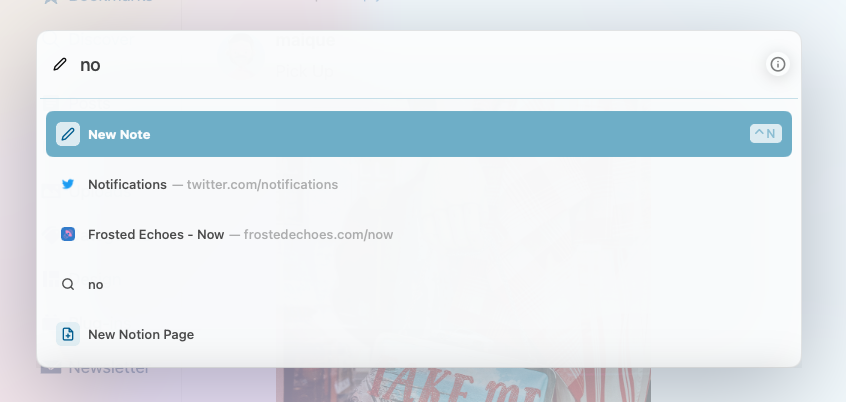
The site window is set apart from the chrome by some nice shadowing and feels like an entity unto itself. When you collapse the sidebar, the site you are on feels like a proper web app. Arc even has a command palette for looking up web pages, creating notes, capturing and marking up screenshots, and playing with extensions (it comes with uBlock built-in).
The browser documentation is shared via Notion, and the browser looks like it has some deep linking into the popular notes app via the command palette. It also has deep linking into Google and Outlook calendars in that you can get your appointment notifications in app. With the matching email clients, you can see your new messages from a pop-out widget and even click to compose a new message. I have yet to play around with that functionality, but in theory it could get web apps for calendaring closer to parity with desktop and mobile apps.
The notes app that is contained within Arc feels pretty basic (which puts it firmly in line with a lot of browser-based notes apps). While Arc has the surprising ability to copy a URL as Markdown from the URL box, the notes feature doesn't use Markdown, which seems like a miss. For instance, when I'm taking notes on a page, I quite often want to capture quotes, but the block quote isn't supported by Markdown formatting or the minimal WYSIWYG editor. Dark mode is also rudimentary in its implementation, with the bright transparent sidebar glaring at you, but perhaps these are early days for that functionality. I try to keep in mind that this is still just a beta. In fact, there is a way to report bugs straight from the command palette, and you better believe I will put that to good use.
Arc feels simple to jump into, although they really push you to make it your default browser, promising additional functionality if you do. It also feels robust enough for power users to continuously find new things to fiddle around with and craft a workflow out of. It's pretty polished for a private beta, and — if you are on a Mac — I would recommend checking it out when you are able (Windows version coming soon).
The first thing that hits you from Swiss outfit The Churchhill Garden's "Always There" are the reverb(y) guitars. Before too long, though, you find yourself entranced by the saccharine sweetness of American lead singer Krissy Vanderwoude's vocals, which bring to mind Velocity Girl's Sarah Shannon. As Vanderwoude sings about "kindness, patience and grace," it's marvelous to get a little twee go along with the richness of her honeyed tone.
I liked last year's single, "Grounded" by the band, but there's nothing of the bite from that song here. I could easily imagine "Always There" as a feature track on a 1992 episode of 120 Minutes and Churchhill Garden perhaps opening for peak-of-their-powers era Lush. Now, they just have to put out a full-length!
As a bonus, here is The Churchhill Garden's cover of The Cure track "Halo," from the b-side of the "Friday I'm In Love" single, where they riff on "Pictures Of You" at the end. The collected b-sides from the Wish album is one of my favorite groups of songs, so this is such a treat.
A few years ago, when I was teaching confirmation at the PC(USA) Presbyterian Church of which I am a member, I was showing a video about church polity and governance from a reform theology curriculum. The video was done in an intentionally kitschy old-school style of animation with the voice over imitation a 50's instructional video. In the video, the congregation is in the church sanctuary, voting on a resolution that was disputed. Since the process was democratic, it should have solved the dispute and brought the congregation back in alignment. In reality, the video showed, the vote takes place and then the slightly less than half who lost the vote just leave to go to another church.
The message of the video seemed so pessimistic. I had to wonder why we were showing the students this video. Maybe it was realistic, but how did it contribute to a positive view of church polity? What kid was going to be enthusiastic about participating in such a process? This question is important, because after being confirmed, the confirmands can then participate in church governance.
It seems we are reinforcing the schismatic nature of the Protestant church in these sorts of lessons. If you don't like the outcome of a disagreement with your church brothers and sisters, just pack up and leave. It's a temptation that all of us face when difficulties arise, just to walk out and not look back. In his book, You Are Not Your Own, Alan Noble writes about how you shouldn't leave your home church, "without much fear and trembling." If everyone took that advice, we wouldn't have thousands upon thousands of Protestant denominations. Unfortunately, that's where we stand, the Christian Church more divided than any time in history, and on the path to becoming still more divided.
I appeal to you, brothers and sisters, in the name of our Lord Jesus Christ, that all of you agree with one another in what you say and that there be no divisions among you, but that you be perfectly united in mind and thought. (1 Corinthians 1:10)
I want to experience a Christianity that doesn't crack at every fault line.
The concept of the Finest Hour playlist is to distill a favorite band's discography into an hour of music (or as close to an hour as reasonably possible). It's a bit of a challenge trying to do a "greatest hits" style playlist within the time constraints and with the right sequencing. The idea was taken from Adam Wood.
Swedish indie band The Radio Dept. has always been mysterious and mercurial. You can compare their early days to early period Belle and Sebastian, when little was known about the bands, and they wanted it that way. For another comparison point to B&S, listen to "You're Looking At My Guy," the final track included here. The Radio Dept. are at once sometimes poppy with a trace of twee (see "Bachelor Kisses") and also intensely political (see "Death to Fascism," "Swedish Guns"). They are known for fights with their record label. How often does that happen in the world of independent music?
I had the rare opportunity to see the Radio Dept. play a few years ago, and it was one of the most memorable shows I've been to — though that may have to do with the recency effect and my aging brain. One thing that stuck out to me was how they almost sounded industrial when playing the political songs listed above. It gave me a new conception of the band and made me wish they would explore that territory a bit more.
I hope I've given you some good tracks here with which to explore one of the most influential bands in Swedish indie pop. Enjoy!
The church that I have been attending, All Saints Orthodox Church has a new website design and a video to go along with it. The video is a meditation on what worship is like for an Orthodox Christian, focusing on the five senses. I appreciate the fact that it brings up the conditioning of the smells, sounds and sights that are involved with worship. I have come to associate the incense used at Divine Liturgy with the very act of worship.
May my prayer be set before you like incense; may the lifting up of my hands be like the evening sacrifice. (Psalm 141:2)
Of course, that the soundtrack is a an ambient track in the vein of Hammock endears me all the more to this depiction of worship in an ancient tradition.
The U.S. has been shaken by the repeal of the judicial precedent set by the Supreme Court in Roe v. Wade. If you spend any amount of time online, you can't escape opinions on the subject. It's remarkable how many people quickly become subject-matter experts about the topic of the latest topic du jour. The leaked draft of the ruling was partly the impetus for me to write this blog post a couple of months ago. I explained why it can be so difficult to compile a digest style newsletter in the climate of perpetual outrage.
I want to continue to read about these issues, I’m just not sure that I wish to write about them. Even in the vastness of the World Wide Web, escaping “the outrage” and reading and writing about something different can be difficult. So, I’m going to slow down on link posting in the way that I have been doing it. I’ll still be blogging. I just don’t want to commit to a weekly email, in case, on any given week, I just can’t find enough that I want to write about. At least not enough to write about without getting sucked into the outrage.
I came back to publishing these newsletters because I really enjoy it and people have told me that they've found benefit in them. However, I'm once again wondering if this is sustainable. I have had to step back from social media — this time including Micro.blog. As people have become more comfortable with the medium, the tone of discourse has changed there. People are posting about politics more, and the posts are usually shrill and reactive. Micro.blog is no longer qualitatively very different from Twitter. I've had to stop following so many people that my timeline is looking a little thin. I'll be writing a bit more about this in a proper blog post. Mastodon seemed like an appealing service to check out, but who needs another social media site to read people complaining about the same things?
I have certainly found some edifying thoughts on the subject of abortion, which I have included in this newsletter, but I won't make that a regular subject of discussion. There is enough of that to go around. Most of the discussion is being led by the most radical voices, who tend to be the same people who spend a lot of time online (especially on social media). I've posted about my respect for Elizabeth Bruenig before. If you want to see the worst of humanity, just look up "Bruenig" on Twitter.
I'm hoping to get my family to go to church with me on Sunday. Last weekend, when I got home from church, my wife was watching a show called, "How To Marry A Stripper." So, we have some things to work on.
Seven Types Of Rest For Exhaustion
Emma Beddington found herself dealing with massive fatigue and brain fog that wasn't going away. She decided to explore a book that promises to help someone rest in ways other than just sleeping.
The book is not, in fact, about that kind of complete withdrawal; it is about incorporating enough moments of rest to stay functional. That may be a depressing indictment of end-stage capitalism: Dalton-Smith is thoughtfully critical of society’s inability to take a preventive approach to its “burnout culture”, commoditising sleep (“It’s a billion-dollar industry, we have speciality pillows, weighted blankets, all of this stuff”) rather than focusing on the root problem. It is, however, refreshingly realistic. I gave the seven types of rest a whirl over a week, to see whether I would feel less tired – whatever that actually means – afterwards.
As someone who has struggled with debilitating post-viral fatigue and is recovering, the prescriptions for rest in this book sound helpful.
"Sure, we can sleep when we’re dead, but a little rest before that would be nice."
Justin Heckert writes about the owner of a trade-in games store, Jason Brassard, who amassed a giant collection of rare video games in mint condition. Brassard took enormous pride in showing off his collection — until it was stolen and then recovered in poor condition.
“Every single game that was in the safe was very deliberate,” Brassard says. “I had the ultimate copies of those games, I had really sought them out over the years. They were in there for a reason. I identified with those games. Like…people know Jason owns those games that no one else has. And I shared them. I had archived them, preserved them.” It felt, he said, “like a tragedy for the video game community more than anything.”
Not to spoil the ending, but Brassard couldn't enjoy his games in the same way after the theft, and after they had been roughed up.
Do not store up for yourselves treasures on earth, where moth and rust destroy, and where thieves break in and steal. But store up for yourselves treasures in heaven, where moth and rust do not destroy, and where thieves do not break in and steal. (Matthew 6:19-20)
Jake Meador writes about the easy acceptance of violence that is cheap and costs us nothing, so we allow violations of conscience instead of taking on the burden of caring.
To take one example: A pathetic number of large firms in our nation have, since Friday’s SCOTUS ruling in Dobbs, said that they will provide funds to their employees who need to travel out of state to secure an abortion. Others have even said they will pay the relocation costs for any employees wishing to move out of a pro-life state. The reality behind this apparent “generosity”? An abortion is cheaper than maternity leave. As one of our contributors observed on Twitter over the weekend, it’s worth asking why so many firms with abysmal histories in labor practices are the first in line to pay for abortions.
He raises some legitimate questions about why large corporations are so eager to encourage women to have abortions. Financial gains are an easy place to look when determining the motivations of companies who, first and foremost, are beholden to deliver profits to their stakeholders. Meador goes on to cite our treatment of farm animals as another example of where we choose expediency over care.
Leah Libresco Sargeant writes in Other Feminisms how she expressed a similar sentiment to Meador when she appeared on a New York Times podcast to discuss the aftermath of the Dobbs decision.
So it's true, you can look around and say, our culture has no room for the vulnerable. It doesn't have room for babies who are vulnerable and it doesn't have room for women who are vulnerable. So abortion is a crutch that lets us navigate that hatred of dependence that's pervasive in our culture. I think it's one more mark of a sexist society that we take the burdens we put on the vulnerable, then lay them heavily on women and demand an act of violence to have equal access to society.
Dependence requires care and effort. It is not efficient, materially profitable or pleasurable, so it goes against our contemporary societal values. If you require violence in order for women to be a part of your community, you are doing community wrong. If you require horrible treatment of animals in order for people to have low-cost food to eat, you are doing food wrong. Violence shouldn't be the cost of entry.
Now, if only our Supreme Court would take a consistent stand on stewardship.
Running Doom On Furniture
Michael Kan reports for PC Magazine on a project where software engineer Nicola Wrachien was able to prove the concept of running the old PC game Doom on an Ikea Smart Lamp.
The project marks the latest attempt to run Doom on a non-PC platform, which has included iPods, treadmills, and classic console gaming systems. Wrachien says his own work could be used as a starting point to “port Doom to almost any microcontroller featuring enough flash and at least 108 kB of RAM,” so long as the chip has enough processing power.
Laysara: Summit Kingdom is an upcoming strategy game by Quite OK Games that has you building and sustaining a kingdom on the side of a mountain.
I don't play many video games these days, but when I do, it's usually because the game presents a world that I want to inhabit. A place that has intrigue or beauty. Managing a mountainside kingdom like a Tibetan Prince has enormous appeal to me. I could practically spend all day just looking at screenshots of these carefully built civilizations from a bird's-eye view. The fact that the game isn't concerned about defeating invading armies or invading other kingdoms is a plus for me. I can't forget those blood-curdling screams the orcs would make in Warcraft when they were coming to trash the buildings you had created. Laysara focuses mainly on staving off and surviving natural disasters (like avalanches — this is set on a mountain, after all) and kingdom management.
Establishing a flourishing city in harsh upland conditions is not an easy feat. Adjust your build strategy to gameplay-affecting vegetation zones and expand to more distant mountain slopes to reach scarce resources. Carefully plan production chains and satisfy various needs of your three-caste society while dealing with mountain hazards such as weather breakdowns and avalanches!
If only I had a Windows machine so I could play this!
Missing Online
John Carey, who has slowed his blogging considerably over the years, reflects on why he's not online more.
My biggest problem right now is still the act of trying to find enough confidence to share much of anything online. It feels like the older I get, the more alienated I feel within the online world. A lot of it has to do with its shifting focus and our lack of attention as trends in social media have moved to quick, rapid engagement. The tiny spike of adrenaline we get as images zip past our eyes for a few seconds and, like a slot machine, we pull down for more, and more, and more, until time and thought mean not much of anything. We blink. and look up from our phones with that dazed, cloudy look in our eyes, and try to focus on reality.
Carey is an amazing photographer, who often used to share his photos as desktop wallpapers. His archives are available for those who want to liven up their monitors or devices.
In a recent newsletter, Adam Wood proposed something called "Finest Hour." The project was to create an hour-long playlist from a favorite artist. He placed special emphasis on the process of track selection and sequencing. I was intrigued by the idea. This exercise might have been more fun in the days of cassette tapes, when you truly would be limited by the constraints of the physical medium itself. The project would take a lot longer, but the challenge itself would be more rewarding.
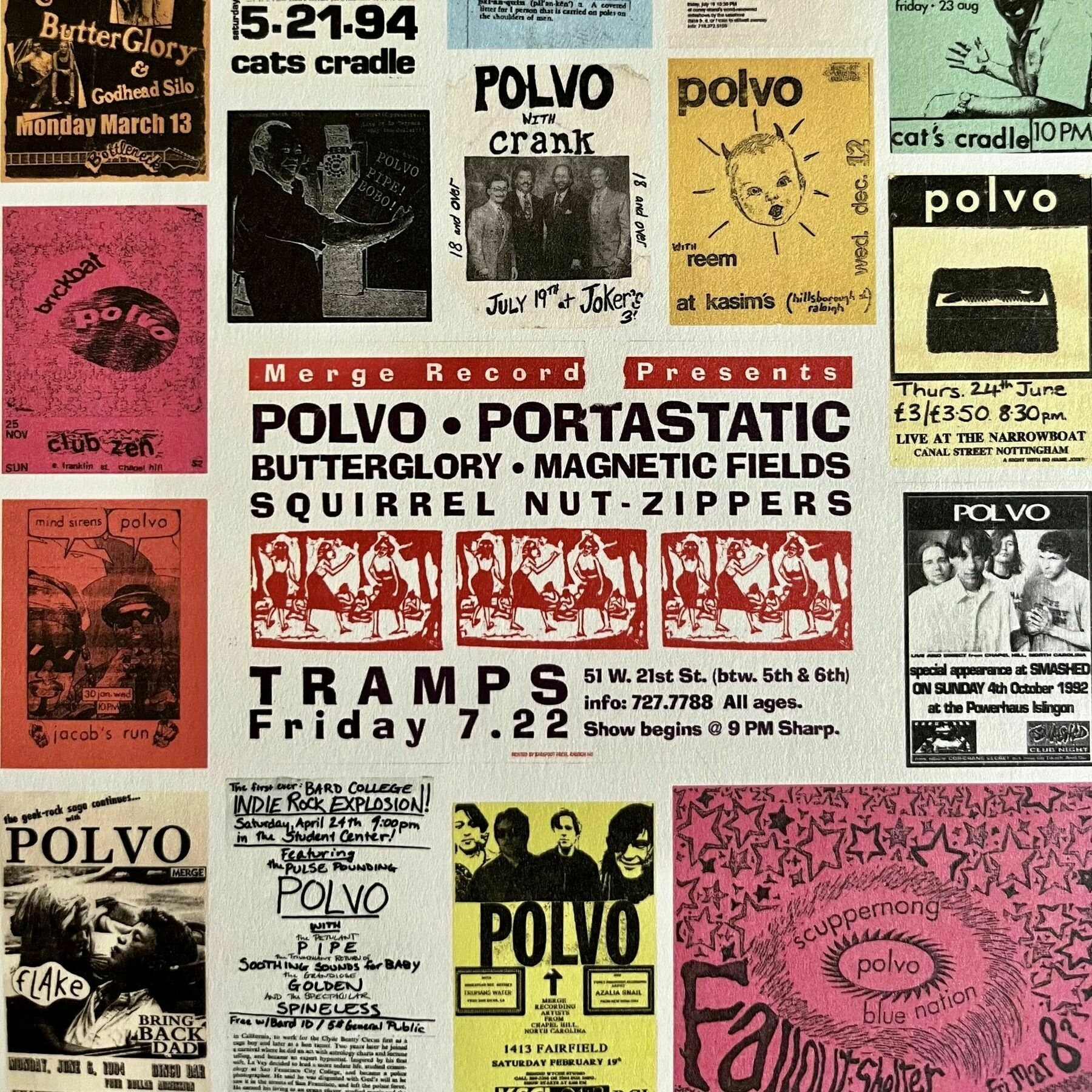
Here we are, though, firmly entrenched in the digital age, and there is joy even in the ease of assembling such a precise collection. The band I chose for the project is one that has stuck with me since my youth. Truth be told, unlike many who tend to keep rotating music they listened to in high school or college (which makes me think of the titular character of Billy Madison), I find myself exploring new music a lot more often. But Polvo has had staying power. I think it's the complexity of their angular and winding tunes, which typically have interesting and hard-to-describe pop hooks. Never anything but inventive, Polvo loomed large in the local music scene when I was growing up and made for a perfect first show at a rock club.
Polvo confounded some who couldn't do the math. The author of the review of their discography in The Trouser Press Guide to '90s Indie Rock wrote, "…it's hard not to ruminate about what the band might be capable of if someone made them walk a straight line just once." Those who got them really got them, though. I count myself among that "enlightened" group.
If you've never heard Polvo before, take a listen and see what you think. Keep in mind that they can be challenging, but stick with them. There are really no other bands that sound like this one. If you have heard them before, feel free to critique the tracks I chose to include.
The heat is on. While we have successive heat waves sweeping across the U.S., I'm thinking about a conversation with a colleague who is from India. People there used to keep doors and windows open a lot of the time, but now they can't because it's just too hot. Remembering that conversation brings to mind a column Ezra Klein recently wrote about climate change.
Over the past few years, I’ve been asked one question more than any other. It comes up at speeches, at dinners, in conversation. It’s the most popular query when I open my podcast to suggestions, time and again. It comes in two forms. The first: Should I have kids, given the climate crisis they will face? The second: Should I have kids, knowing they will contribute to the climate crisis the world faces?
At first, it really seemed inconceivable that so many people are worried about bringing children into the world because of climate change. Then you think about the temperatures that India has been facing, and it starts to actually make some sense. The environment is becoming inhospitable to human life in certain places, and it is happening fairly rapidly. However, Klein is ultimately right to caution against this type of thinking.
Cal Newport recently wrote about the return of the 1,000 True Fans model. Years ago, techno-optimist and co-founder of Wired Magazine, Kevin Kelly, came up with the idea that creators would be able to make a living online if they could accrue one thousand true (read: passionate) fans. The idea was lauded by some and doubted by others, such as Jaron Lanier. Then came social media and the idea that once seemed far-fetched became even more so, as people started migrating to siloed platforms and letting their creativity drive the growth of those platforms. Things seem to be shifting, though.
Changing attitudes toward social media created another breakthrough for the 1,000 True Fans model. In 2008, few people seemed interested in venturing beyond the social-media ecosystem, because this was where much of the excitement about the Internet was concentrated. As I learned from personal experience, to have expressed skepticism about these platforms during this period was seen as regressive and eccentric. In the aftermath of the 2016 Presidential election, these attitudes radically shifted. For different reasons, both sides of the political spectrum began to immensely distrust the platform monopolies. The algorithmically curated streams that had once seemed so futuristic suddenly became Orwellian. Today, it’s not only acceptable to move more of your online activities beyond the walled gardens of social media—it’s celebrated.
New(ish) platforms such as Substack or Ghost (the open source software that powers this newsletter) have enabled creators to start making living wages from independent of their content. Making a living off your newsletter still seems slightly less likely than becoming a sports star, but as Newport details, it is happening for some.
Star Wars Fans Experience A New Emotion: Happiness
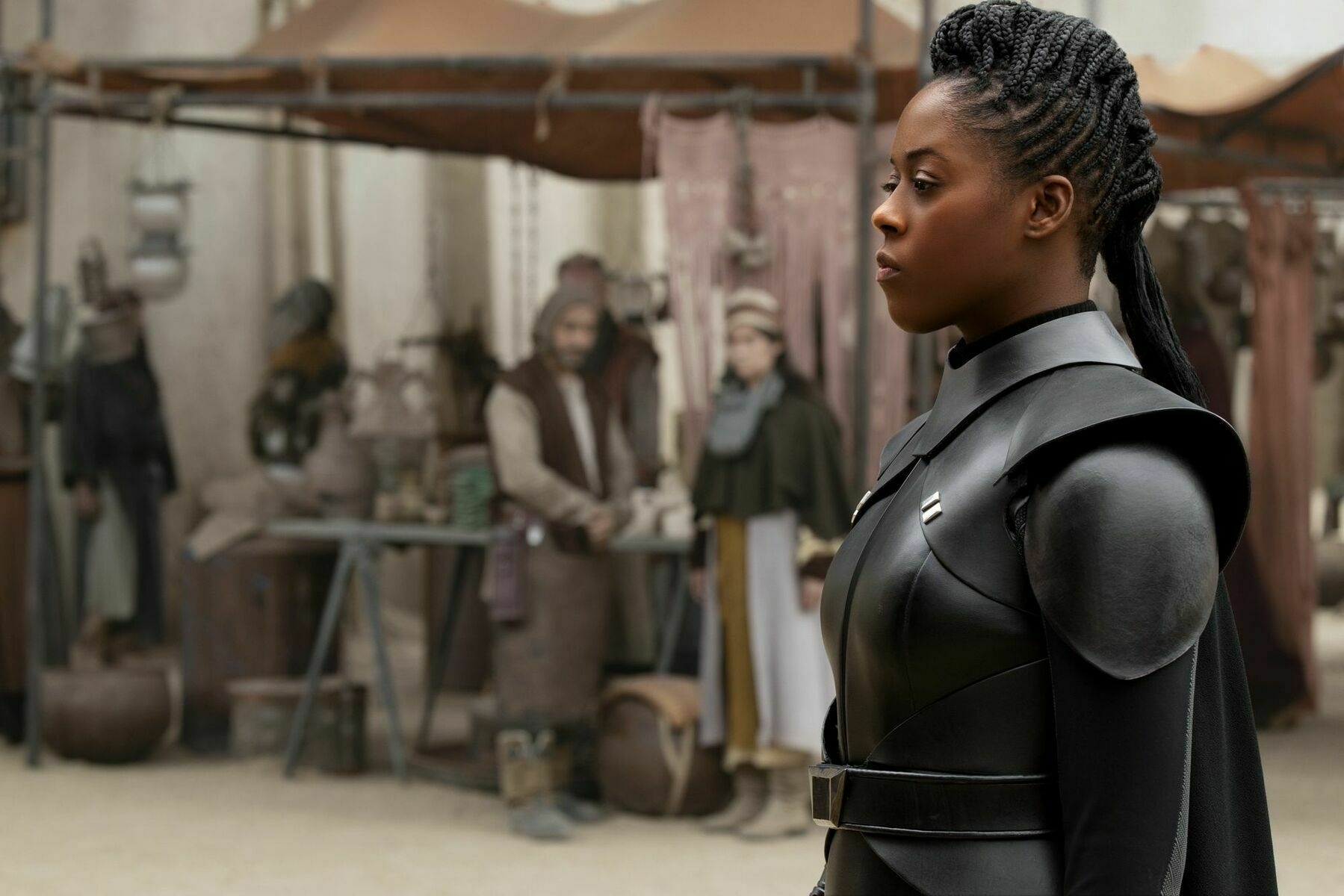
Mark Serrels rounds up coverage of Obi-Wan Kenobi for CNET. His assessment is that the consensus among real Star Wars fans (not racists) was that it was a compelling miniseries. Serrels has been critical of some moves Disney has made with Star Wars, but thinks they got it right this time.
Disney's need to endlessly plug the gaps in Star Wars' increasingly rigid meta-narrative has always felt strange. A universe that once felt awe-inspiring and gigantic was rendered as tiny as a snow globe. But Obi-Wan Kenobi felt like a story worth telling, a story that created connective tissue all Star Wars fans could resonate with. A story that everyone – with their own unique ideas about what Star Wars should be – could get behind.
I agree with Serrels and others who have stated that the creative forces behind Star Wars have done the difficult job of making a massive galaxy seem too small and centered around a select few characters. I'm skeptical of the desire to fill in every gap left in the movies. However, this series accomplished something I thought wasn't possible — it made me reconsider the prequels in a more positive light. The transition of Anakin to Darth Vader feels a lot more fleshed out and not as forced. I honestly wasn't totally ready to accept the end of Revenge of the Sith as the final, canonical, battle that finished things between Anakin and Obi-Wan. Thanks to this series, I didn't have to.
I give props to the writers and cast for making another thoroughly enjoyable romp through a galaxy far, far away.
In this piece from last year, Anthony Pascale catches us up-to-date on the controversial Star Trek SNL skit from 35 years ago.
In December 1986—one month after the release of Star Trek IV: The Voyage Home—William Shatner hosted an 8th season episode of NBC’s Saturday Night Live. One of the skits, called “Star Trek Convention”—but more often known as the “Get a Life” skit—poked fun at fans at Star Trek conventions. The skit (which you can see below) was written by SNL mainstay Robert Smigel with help on the nerdy details from SNL staff writers Jon Vitti and George Meyer.
I loved that skit when I was a kid, not realizing that some people might actually take offense at the stereotypes. After Rod Roddenberry criticized the skit in an interview, Shatner shot back that this was presentism (applying current values to things done in the past when values were different). I'm not sure it qualifies, but if it does, Rod would be in good company as presentism abounds these days.
Dan Alcantara writes about how keeping a small notebook helps him to control his expectations of the number of things he can get accomplished in a day.
Which finally leads me to the reason I placed a picture of a small notebook at the top of this post. My pastor told me about a colleague of his who kept a very small diary. When asked about it, he said it was a means of stress control. A small diary means that there is only so much that can go into it. There are only so many meetings that can happen and there are only so many tasks that can be done.
I've never thought of this method of setting expectations with truly physical limitations.
I wrote about the sci-fi successor to the fantasy tabletop RPG Ironsworn in the Week on the Web newsletter a few months ago. Starforged has now been officially releases in digital form, with pre-orders for the hard copy being taken as well. The worldbuilding for this game looks fantastic, and its influences are an enticing mix of sci-fi fantasy universes.
Inspiration comes from the quest-driven stories of The Mandalorian, the lived-in aesthetic and fantasy-infused trappings of the original Star Wars trilogy, the workaday exploits of Firefly, the isolated horror of Alien, the mysticism and faction politics of Dune, the retro-tech and desperation of Battlestar Galactica's modern reboot, the cosmic mysteries and class struggles of The Expanse, and the gonzo adventures and fantastic locations of Guardians of the Galaxy.
The gaming engine is based on Ironsworn, which took elements from the Apocalypse World rules. I used to play a bit of Dungeon World (based on Apocalypse World) and really appreciated the story-driven mechanics. The rules are lightweight and flexible and designed to drive the fiction. You don't get bogged down into detail about how something is going to work. The rules are easy enough to let the play and the story flow.
One of the more unique aspects of Starforged is the different modes of play:
Guided: One or more players take the role of their characters, while a guide moderates the session.
Co-Op: You and one or more friends play together to overcome challenges and complete quests. A guide is not required.
Solo: You portray a lone character driven to fulfill vows in a dangerous world.
The variety of game modes and the fact that you can play with fewer people ratchets up the value of this game. Did I mention the PDF is only $20 and the full color hardback 404-page book + immediate download of the PDF is only $40? Honestly, the purchase would be worth the illustrations and intriguing settings alone. Gorgeous artwork by Joshua Meehan gives the player an immersive sense of the world which they will be exploring. It is gritty and innovative and ready to be expanded by the player's imagination. It certainly shows the direction of the game has been shaped by some of the recent Star Wars TV series we've been enjoying.
My oldest is off school for the summer and is trying to learn the arcane rules of the Star Wars: Force and Destiny RPG, so we've got a bit of competition. Although I'm happy he is finally picking up the book we got him for Christmas, and it's getting used, I'm a little concerned that the complexity of the rule set for that game will keep it from being — you know — fun. I have much more confidence in the variant of the Apocolypse World engine that Starforged is using to provide a good basis for fun and engrossing gameplay. Maybe we can each learn the systems for our respective games and do a little comparison testing. I can think of worse ways to spend a few summer days.
I sent out a note last Sunday about switching my blogging to a self-hosted solution. It was a lot of work getting things setup, but once I did, I felt like I was good to go. Then, as soon as I sent out a newsletter about the change, I started having numerous issues with reliability, availability, and performance. Those were mitigated by increasing my hardware and putting a proxy in front of the blog.
I later tried to make some tweaks to my theme. My version of Gulp (the package manager) became corrupted, and I couldn't package my changes into the theme. I spent quite a bit of time trying to straighten that out and never was able to get my machine clean enough to eliminate the issues.
Thanks to a kind reader, I found out that my emails were going to junk mail, so I was tweaking email settings, but I wasn't getting consistent results. I tested with my wife and she was still getting messages thrown into her junk mail. What good is a newsletter if no one sees it? You all will have to let me know if this email breaks through to your inboxes.
Thursday, I got a notice of a critical vulnerability in my version of Ghost after work, and patching my virtual server was about the last thing I wanted to do. Let's just say I'm losing my enthusiasm for self-hosting. Will I ever learn my lesson? I'm going to give it a bit longer and see if I can work out the kinks.
I can't complain about this week in general, though. It has been productive. I'll be officially increasing my work hours next week, although typically, I am working the additional hours anyway (just not getting paid for them). I'm tremendously grateful to be where I am after going through such a difficult time with my health these last few years. You never know what you've got until it's gone, and I'm less likely to take the little things for granted these days.
I've been attending an Orthodox Christian church lately and I have two posts in draft mode about my thoughts, but they just haven't quite come together the way that I would like. I'm hoping to fill in the gaps and publish them soon.
I have been thinking recently about trying out federated social media site Mastodon. I'm interested in non-algorithmic microblogging and solutions that don't actively attempt to antagonize me. Cherie Baker recently joined Mastodon and has some good things to say about her experience.
To my surprise, I like it! Mastodon + blog feels like a comfortable setup. In truth, shoehorning Twitter-like activity into a blog format always felt awkward to me. I’m not going to “live tweet” a movie on my blog, there are no silly gifs conversations here, and my blog has no good options for ephemerality other than lots of manual deletions.
I can relate to it feeling awkward to fit tweet-size posts into a main blog. It makes some sense to keep short updates separate. I also learned about features that I didn't know existed in Mastodon from Baker's post — such as the ability to set posts to auto-delete unless you mark them for retention. That pairs well with the transient nature of many microblog posts.
I'm just not sure that I need a service that is such a direct Twitter replacement, though, so I'll think before I leap into another pond.
This article by Nellie Bowles about the downfall of San Francisco and how it precipitated the ouster of DA Chesa Boudin was so fascinating I could hardly put it down. It has the narrative style of an engrossing book. Bowles provides a cautionary tale of what can take place when left-leaning city politics get out of control.
What happened to the man at the Safeway, what happened to Dustin Walker—these are parables of a sort of progressive-libertarian nihilism, of the belief that any intervention that has to be imposed on a vulnerable person is so fundamentally flawed and problematic that the best thing to do is nothing at all. Anyone offended by the sight of the suffering is just judging someone who’s having a mental-health episode, and any liberal who argues that the state can and should take control of someone in the throes of drugs and psychosis is basically a Republican. If and when the vulnerable person dies, that was his choice, and in San Francisco we congratulate ourselves on being very accepting of that choice.
Bowles also touches upon the ouster of the school board members. The story about how the members tried to outdo each other with how many boxes of intersectionality they could check off was bananas.
Rebecca Schuman gives advice for those dealing with Long-Covid that could benefit almost anyone with chronic illness. She recommends listening to your body and going into "safe mode" when your energy is down.
Everyone over the age of 35 remembers what used to happen when the old-school PCs went on the fritz and the dreaded “blue screen of death” occurred: If you could actually get your PC working again, it often went into safe mode, in which only a fraction of the programs worked, the font was 19 point, and the screen went as pixelated as the original Super Mario Bros. The computer had the good sense to let us know that anything over and above its absolute basic level of functionality would cause it to melt into goo. So, too, might be the case with you.
I wrote recently about how I'd prefer to express my views about a given subject by writing about them. It's easier for me to write about something in a blog post and then point people to that blog post than to discuss the subject in conversation. If the subject is something in which I'm interested, I can be effusive, talking too much and not being appropriately succinct. If it's something that aggravates me, I can get too angry.
Becca Rothfeld goes a bit farther with this mentality.
Who in their right mind would want to talk, much less listen, to a person who has contrived to spend as much of her life as possible crouched over her computer in isolation, deleting unsatisfactory variants of a single sentence for upwards of an hour? Nothing in my daily practice has prepared me for the gauntlet of a tête-à-tête. Writing is an antidote to the immediacy and inexactitude of speech, and I resent any attempt to drag me back into the sludge of dialogue.
I'm not totally averse to wading into "the sludge of dialog," but many times I'd rather go through the calculations necessary to write out my thoughts.
Aakash Gupta has a detailed piece on the history of podcasting. He goes into how Spotify has been able to pass Apple, the first name in podcasts, almost since audio feeds were added to RSS enclosures.
Just three years later, the efforts have borne fruit. Spotify just passed Apple for monthly active podcast listeners, and it is set to vastly outgrow Apple over the coming years. By 2023, analysts expect Spotify to have 30% more MAU than Apple.
I have to say I'm a bit surprised by the data, skeptical of the projections, and hopeful that Spotify will not stay the leading podcast provider for long. I have my beefs with Apple, but The Spotify ecosystem is not a good place for the majority of podcast content to end up.