I posted a video from Atlanta's Bailey Crone, AKA Bathe Alone, just a few months ago. I had to share the video from one of her more recent singles, though, because it's one of my favorite songs this year. The song, which was written after Crone practically kidnapped her best friend and took her to a Beach House show seven hours away, sounds wistful and mature. The video is just fun and sweet.
The single artwork and music video for "Decades & Dreams" were inspired by old photos of both of her great-grandmothers on a boating trip together, "where they looked completely miserable," says Crone. The video shows Bailey and her best friend — and inspiration behind the actual song — made up in full grandma finery, complete with chunky orange life vests and curly gray hair. The two share a toast to nostalgia and relive youthful adventures in the bittersweet visual.
Melodic exhales form the backing vocals and mellotron (my favorite) is prominent in the song's instrumentation. The simple guitar line adds some emotional heft to the nostalgia.
"Decades and Dreams" is set to appear on Bathe Alone's sophmore album, Fall With The Lights Down, which is due out from The Record Machine on 7/8/2022.
I wanted to let everyone know that there have been some changes to the blog. Frosted Echoes has gone back to being self-hosted in order to get the capability to expand the vision of the site a bit. I was bouncing back and forth between Ghost Pro and Micro.blog and both were a bit limiting in their own ways. Self-hosting a blog is more work, but it's worth it to someone as particular about blogging as I am.
Things will be up and running here and image content filled in shortly. Week on the Web newsletters will be continued here, as well. Don't adjust your TV sets, but please do adjust your RSS readers and bookmarks, as I've finally done something I've wanted to do for a while — changed the domain name to Frostedechoes.net. The .net TLD makes a lot more sense for the blog than .com, since the site is not in any way a commercial enterprise. I'll put a redirect in place for a while. I will continue to post on Micro.blog, because I like the tools for adding a bit of social to the blogging experience and the community is great.
This has been an exciting weekend for me as I got various pieces of the self-hosting puzzle in place. I hope to keep sharing interesting material, mainly around the topics of faith, noise and tech. Thanks for reading Frosted Echoes and being with me on this journey.
Ever since she showed up in the band TOPS, I've thought Marta Cikojevic looked like a 70's icon. Had she been alive at the time, she could have played Kristen Shepard of "Who Shot J.R.?" fame on Dallas. If that didn't work out, she might have been one of Charley's Angels. So it was no surprise when Cikojevic unleashed a solo project under the name Marci and it sounded like a record that would have been in rotation at Studio 54.
This track hooks you in a disco groove and doesn't let go. TOPS bandmate David Carriere co-wrote the songs on the record originally on Rhodes and bass. It’s evident in “Terminal,” as the bass is the standout instrument and second only to the vocals. The sensual vocals paired with the come hither looks in the video are blushworthy.
The first full-length from Marci will be self-titled and is due out this summer on Arbutus.
I have been growing increasingly frustrated with Apple lately. Apple is a giant company now, as compared to the scrappy upstart they were when I started using their computers in 2005 upon my return to college. A lot has changed. Their workforce and market cap are massive. They are always plowing forward at breakneck speed now, sometimes at the expense of their users and their products.
Screen Time
The first thoughts I had following the Apple Worldwide Developer’s Conference Keynote this week centered around iPadOS 16. It’s ironic that Apple is now advertising new Parental Controls with iPadOS 16 when the existing ones don’t work. I have had a support ticket open with Apple going on nine months now about how the Downtime feature with Screen Time doesn’t function properly. I set limits on my son’s iPad gaming usage, and then frequently find him going over those limits just by noticing that he’s been playing games for a long time. When I check, the Screen Time limits have reset themselves to be disabled.
I’ve set screen time limits for myself, and they generally last 2-3 days before resetting. Once I’ve realized things have reset, I have to go and turn the feature back on again, and specify all the exceptions. Then, a couple of days later, I have to do it over again. I have spent hours on the phone with Apple support troubleshooting, only for them to tell me it’s a known issue in development, and they just haven’t fixed it yet. My emails to follow-up are ignored. Each time I call — which I did again a couple of weeks ago — the support rep walks me through all sorts of troubleshooting that I’ve already done, then disappears for a while, and then comes back and tells me that they are aware of the issue and that others are reporting it. They still have no ETA on a fix. Six months ago, they told me a fix should be coming soon, and they would do something special for me and my son for our patience. They haven’t fixed the bug or done anything special for us.
As someone who works in software development and spent ten years as a QA Manager, my advice for Apple would be to fix the breaking feature bugs before adding on to that same feature. It makes absolutely no sense to add anything to Screen Time or Parental Controls when the basic functionality doesn’t even work. This is a critical feature for me, as a parent. I need to be able to regulate my child’s screen time. Being able to control your child’s technology usage is not a nice-to-have, it’s an expectation these days. If the issue isn’t resolved, I will need to move my child to another platform where I can ensure he has appropriate limits. I’m starting to look at a Microsoft Surface tablet to replace his iPad. A tablet running Windows would give him the ability to run more games, anyway.
Forced Obsolescence
Another thing that I quickly realized regarding the announcement of iPadOS 16 was that I wouldn’t be able to run the signature feature, Stage Manager, on the iPad Air I bought new last year. That’s right, Apple products are obsolete after a single year. Had I known last year that I wouldn’t be able to run the multitasking features that were coming out in one year, I wouldn’t have purchased the iPad. Between the high-priced super Smart Keyboard and the tablet itself, the total was over a grand.
As regular readers of my blog and newsletter will know, I’ve been dealing with disabling illness for the past couple of years and I can’t be spending a ton of money on computers that are out-of-date within a year. It would be fine if the iPad could serve as my only computer, but that functionality (being able to work effectively with an external screen) is a part of the Stage Manager feature. Therefore, I still have to maintain another desktop computer. If I want to be able to sync my software between the desktop computer and the tablet, those devices both have to be from Apple.
When I told my boss about the fact that my almost-new iPad wouldn’t be getting the new features, he laughed at me and said that was typical for Apple. He cynically chalks it up to Apple trying to gin up more sales. Getting laughed at is something I’ve gotten used to as an Apple user over the last few years, but I’ve got to say, this time it stung because he’s right. This situation is ridiculous, and I feel like a sucker.
Sticky Ecosystem
Apple has a very sticky ecosystem. Not only does buying more of their products ensure that your devices play together nicely, but they also have the healthiest independent developer community of any platform. For example, I can’t think of a single RSS reader on Windows. Nor can I think of a Markdown text editor that can post to a blogging engine. On the Mac there are many. As a power user, I’m not confident that you can even switch to Linux or Windows without giving up many capabilities provided by independent software. This is the situation, even though Apple, by many people’s estimates, does not treat their developers well.
So as my frustration with Apple grows, I’m almost equally frustrated with companies like Microsoft for failing to make a platform as compelling as Apple’s for the personal computer developer and user. If one could do the same things on Windows that you can do on the Mac, it would provide Apple with more competition and a level of accountability from which their current hegemony in certain areas protects them.
I doubt I will be switching away from Apple at this point, but I’m trying to think of ways to become less dependent on them for my computing, especially when it comes to my hobbies.
A colleague was just telling me about how he hasn't watched the news in approximately three years. He found himself getting so agitated by both sides of the political spectrum and the way the news was presented, that he just quit cold turkey. He feels like he's much happier for the change, and his wife fills him in if something major happens.
It seems as if I'm hearing about more and more people who decide that giving up social media is not enough to keep their frustration in check. Cheri Baker points out that it's not just social media that plays with our emotions.
I’ve decided to stop consuming American news media. It’s easy to criticize Facebook and Twitter for their amplification of misinformation and fear, yet I’ve come to see that the media provides the exact same poison, only in more moderate doses and with a better vocabulary.
hypertext.monster
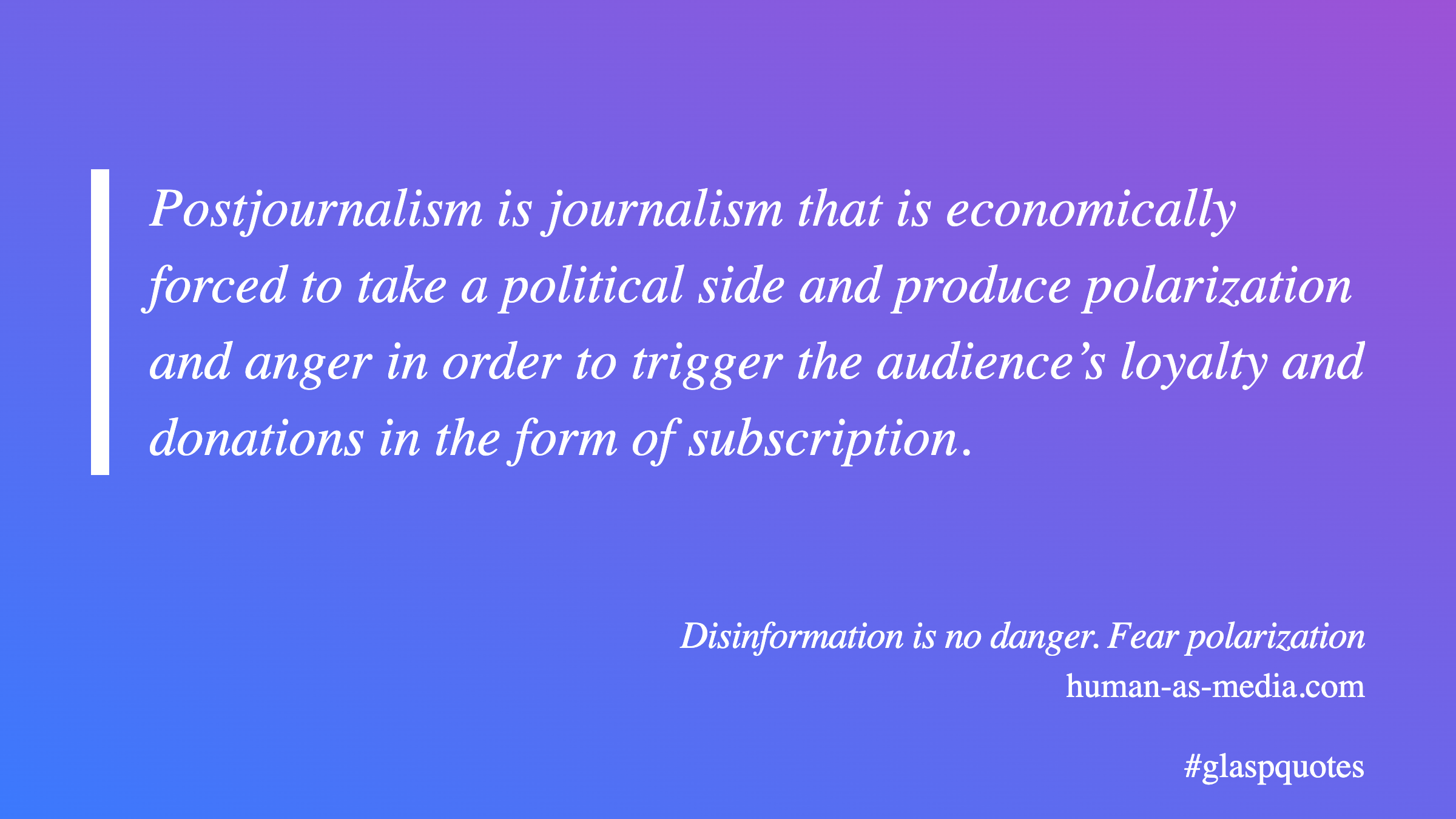
Mir details what makes postjournalism different from the journalism that came before it. While the distinction has always been obvious in media organizations like Fox News, it is now evident in organizations like NPR and others that would still probably attempt to claim objectivity.
Lumenette is a new musical project from Christine Byrd (Hammock contributor and wife of musician Mark Byrd). “I’m a Sensory Explosion” is the first Hammock single to credit Lumenette as a cowriter. The song is a beautiful, elegiac exploration of opening your senses to the sometimes overwhelming weight of the natural world. The textures of the song are soothingly familiar to long-time Hammock devotees and Christine’s vocals add a traditional 4AD/shoegaze sound. Perhaps the track is best listened to on a cloudy, rainy day.
This is a promising taste of what is to come from Lumenette. The new musical project will certainly bear some of the hallmarks of the Hammock sound. I’m eagerly anticipating the full album.
Lumenette’s first long-player, All Around My Head, will be released on 8/12/2022. The first proper single is due out this month, on 6/17.
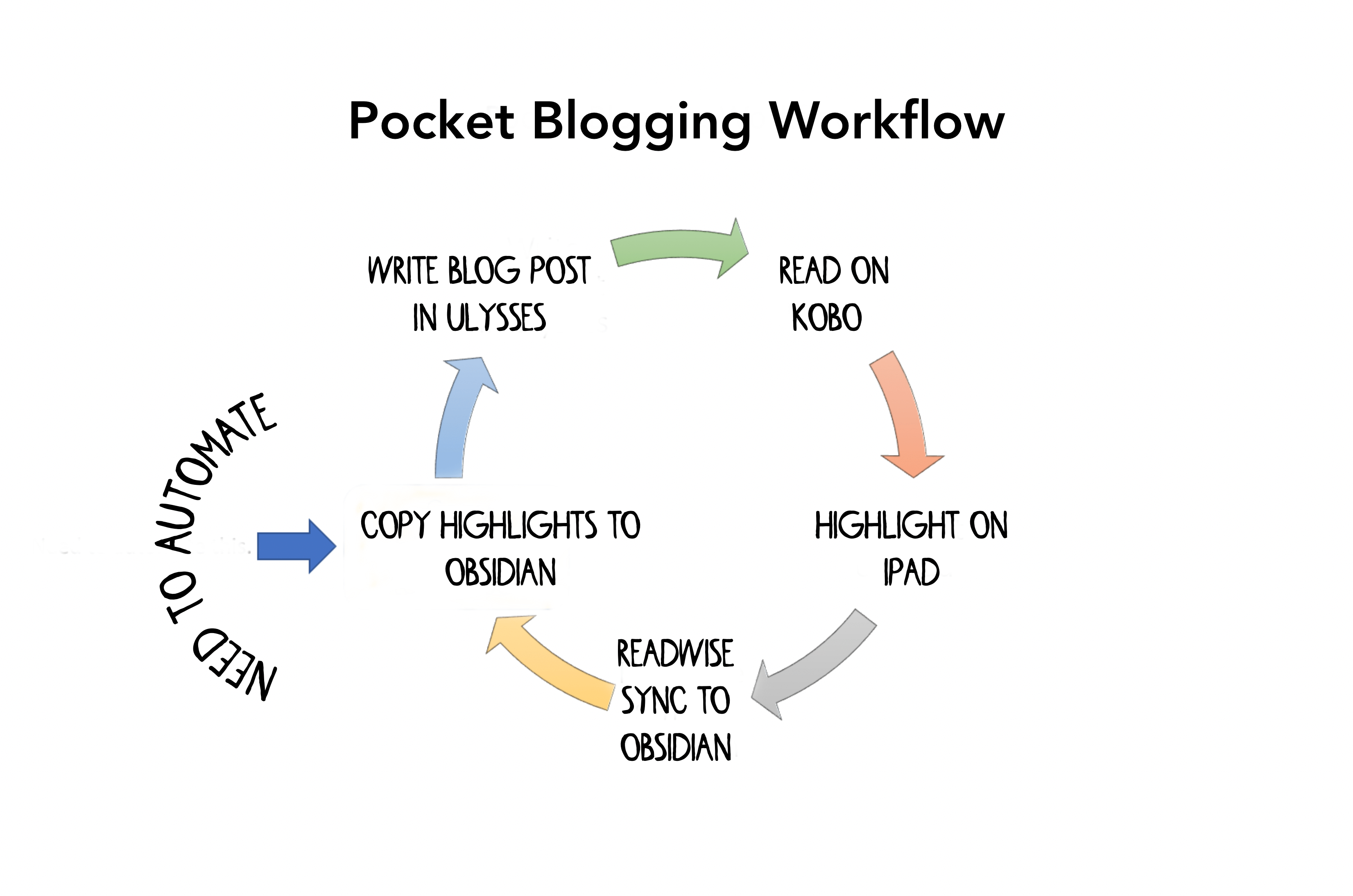
I have a Kobo Libra 2 ereader, and it’s one of my favorite devices. Of course, it is used for reading books, but I spend just as much time reading articles saved from the internet. I find I have a much greater capacity for reading long materials passed from the internet on an e-ink device. I’m using Pocket as my read-it-later service, and it syncs well with the Kobo. It’s a 2-way sync, so you can favorite and archive articles from the device.
Other read-it-later services, such as Instapaper and Matter, have a 1-way push to the Kindle, but anything you do on the Kindle does not sync back to the service. While a 2-way sync is intrinsically superior to a 1-way sync, how the sync fits within your workflow determines how much more useful it is. In my case, I mainly use the 2-way Pocket sync on my Kobo to sync favorites back to the service, so I can go back to them on an iOS device and make highlights from there — something you cannot do on the Kobo. Readwise (I’m on a free trial of that service) syncs the highlighted passages and other metadata from Pocket to Obsidian. I pull article information from Obsidian into Ulysses to write about it. I’m doing that part manually. I don’t yet have it automated, like Matt Bircher.
Highlights
Although my workflow is okay, it’s a bit more manual than I would like. It would be much easier, for example, if I could highlight article passages on my Kobo and have them automatically sync to Obsidian, as I can do with books. Since I have to go back to my iOS devices to create highlights, the 2-way sync is of somewhat limited usefulness, in my case. It is hardly superior to the 1-way push from Instapaper or Matter to the Kindle, where I have to go back to my iOS device for article management, anyway.
Where Instapaper and Matter end up being superior to Pocket is in the management of highlights. Through a third party service like Readwise — that has a non-trivial monthly subscription fee — Pocket has decent highlights management. On its own, extracting highlights from the service is difficult. From the web interface, you can only copy a link to the article from the highlight. Inexplicably, there is no way to pull out highlights without going through a standard copy and paste, which makes the usefulness of highlights themselves low. On iOS, you can extract the highlights through the share button, but not many programs can accept the output and most only show a link to the article. Ulysses, for instance, only occasionally captures the quote. I would love to see the folks behind Pocket come up with better options for highlight export. Perhaps even an image you can share on your blog or social media, like many other services, such as Glasp or Matter, would be nice.
Unfortunately, I have low confidence in the ongoing development of Pocket. The “what’s new” section of their web app has not been updated for almost a year. Their parent company, Moz://a, is consistently in financial trouble. Theoretically, Pocket as a revenue stream should help, but their pay tier offerings have very little value add. I’m at a loss for what $5 a month gets you over the free tier, except more than 3 highlights per article, additional fonts and tag suggestions. I find 3 highlights per article to be plenty for most pieces, I’m fine with the Graphik font, and I can create my own tag taxonomy. One of the tags I use is an @[name] tag to remember where I found the link, so I can provide proper attribution if I write about the piece on my blog. I doubt Pocket is going to suggest tags that would fit in such a custom system.
Matter
In contrast to the slow pace of Pocket development, Matter has been aggressively improving their app. They just launched version 2.0, in what, I believe, is less than a year after the original 1.0 release. Version numbers don’t necessarily convey the pace of change, but in this case, the application was redesigned for the second release. The first version of the app was frequently criticized for being too cluttered. Matter 2.0 removed the social experience, which is better left up to dedicated social media platforms, and received a largely positive response from users.
Matter is based on the premise that the modern reading economy is being constructed by individual writers rather than aggregates of writers brought together by publications. So, it builds in what is essentially an RSS reader for blogs and newsletters, based around writers. The creators are betting that the kind of app will become increasingly necessary in a fragmented reading environment.
Still, we can predict a few things with confidence: The supply of great content will continue to rise (and nichify), attention will always be scarce, and the returns to making good decisions about what to read will remain high — and indeed, increase — over time.
The paradigm seems to work fairly well, with the writers you would expect being recognized by the system and made easy to follow and more writers being added all the time.
Ereaders
Coming back to the reading experience on an ereader, Matter lets you push articles individually to Kindle. The feature assumes that you don’t want to automatically sync all of your saved articles to your ereader. It also assumes that you don’t necessarily want to send all the articles in your inbox to your ereader (like Instapaper does). While the Pocket/Kobo integration is smart enough not to send things like videos or articles that can’t be parsed to the Kobo, you still get everything else, which can be a plus or minus, depending on your workflow.
I might be ready to dive further into the Matter ecosystem as a forward-looking alternative to Pocket, but am I prepared to get back into the world of Amazon reading with the Kindle? Despite my strong feelings toward Amazon, I’m considering it. I’m glad I’ve got an old Kindle to try a new process on, so I don’t have to jump in without seeing what this looks like.
Inspired byDerek Sivers, this page includes a sample of what I’m thinking about and working on right now. Last updated November 6, 2023.
I’ve always wanted to experience a tiny house, which, to be clear, is different than wanting to live in a tiny house. I read somewhere recently that over half of the people who bought tiny homes a few years ago when their popularity peaked had converted them to Airbnb rentals. So, I took advantage of the trend and booked a tiny home in the mountains of NC for a long weekend for myself and the wife.
To summarize, the tiny home was just about perfect for a short stay, but I had my instinct that I wouldn't want to live in one confirmed. That understanding was probably one of the best things I could take away from the experience. For the vaction, living lightly was ideal for allowing us to getaway to destinations like Boone and Blowing Rock, where we enjoyed the hiking and downtowns, but allow us to come back to a space that felt comfortable to us and didn't require a lot of upkeep.
We were also able to catch up on some movies we had been meaning to check out, which is actually a pretty rare treat for us. I paid only minimal attention to the news, which was centered around the crisis in the Middle East, the new Speaker of the House, and the death of Matthew Perry — depressing topics, all.
The Mountainview tiny house
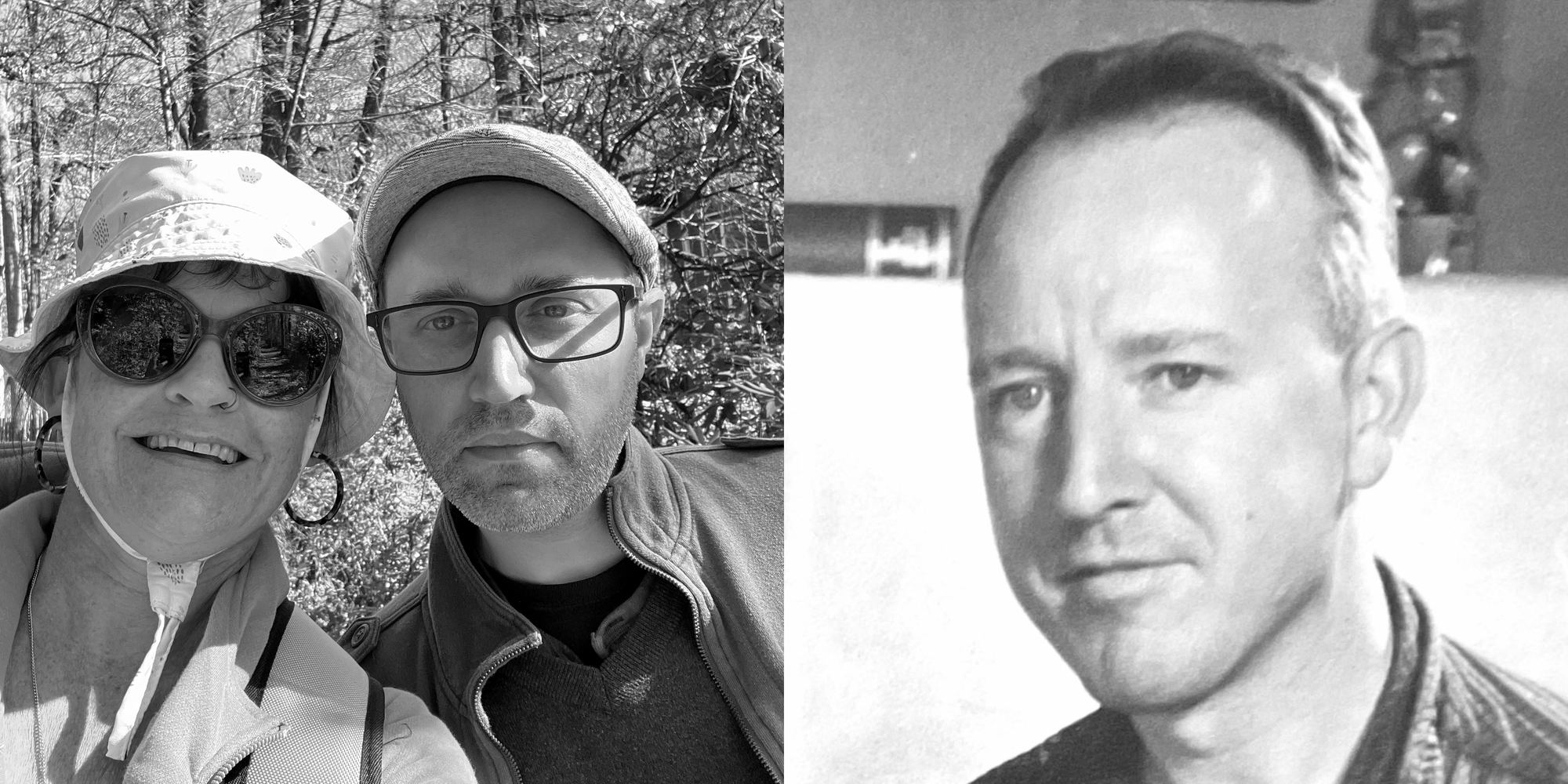
I got a few pictures on the trip, as did my wife. When I reviewed the pictures, a selfie that my wife took of the two of us reminded me of my resemblance to my grandfather on my mother's side.
The resemblance to my maternal grandfather
Of course, we got some shots of the amazing fall colors.
The colors of the Smoky Mountains in the autumn
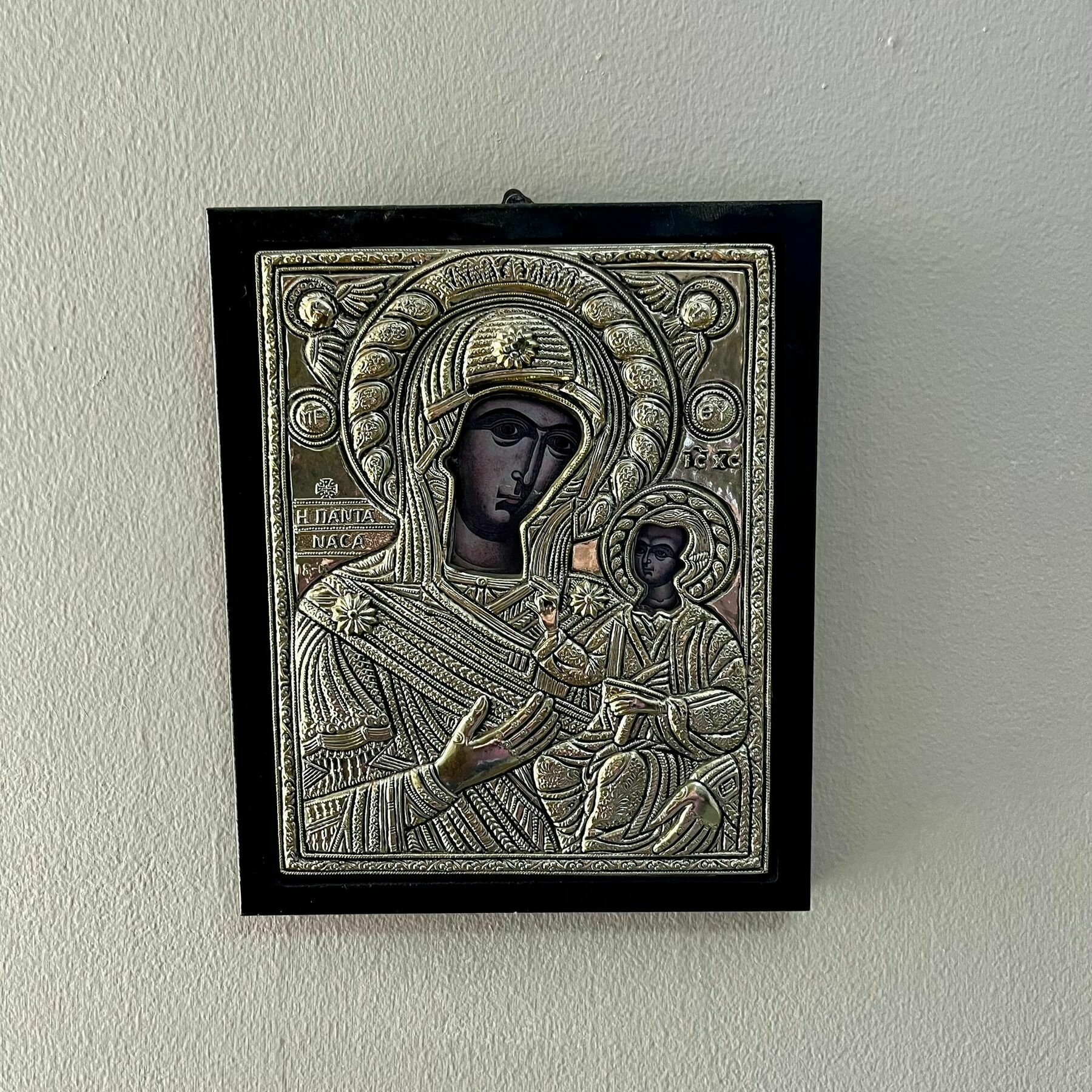
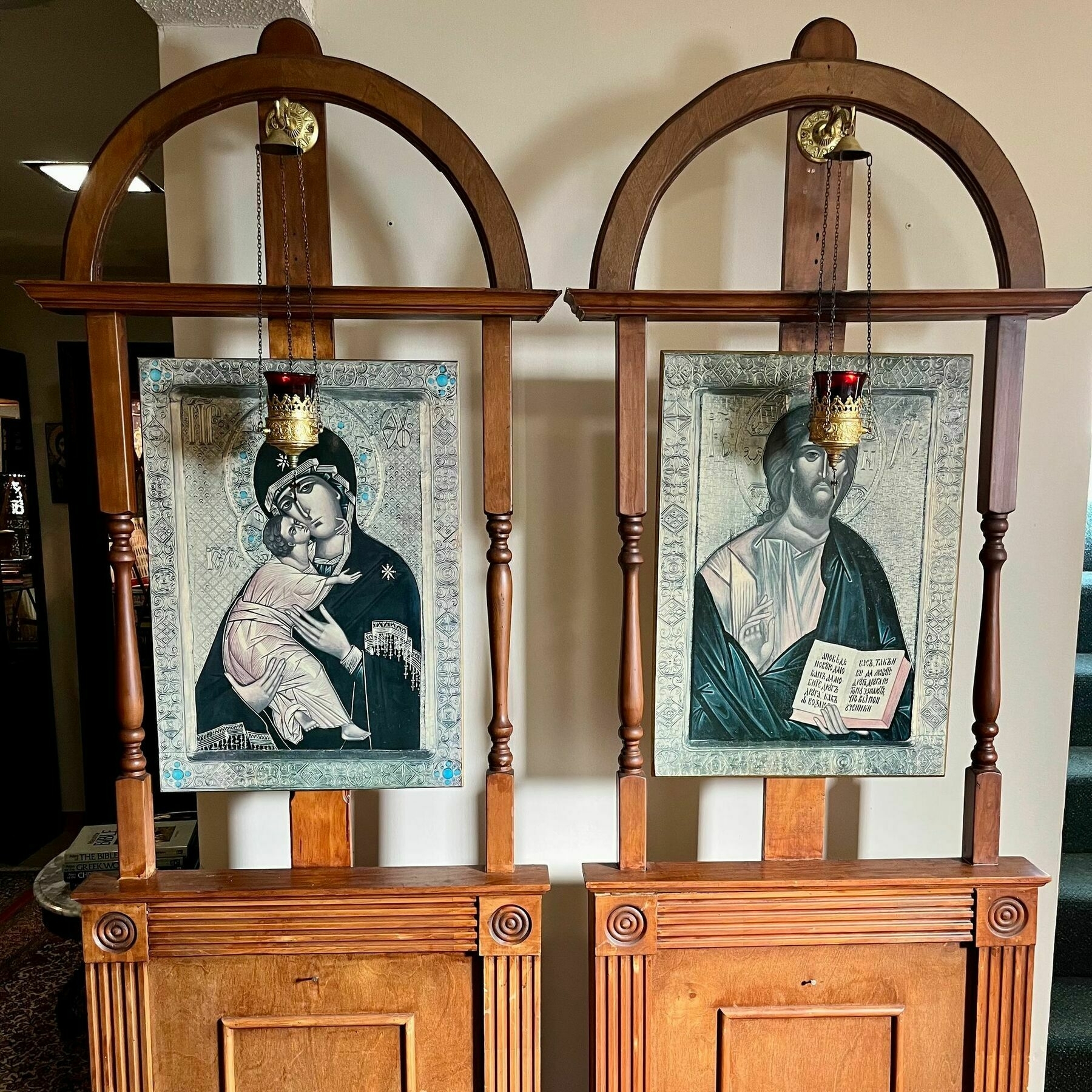
We attended Divine Liturgy at Saints Peter and Paul Antiochian Church. It was a beautiful little parish and I'm glad we were able to experience a service there. The homily helped my wife understand the veneration of icons, which was a mystery to her previously.
Sts. Peter and Paul Antiochian Orthodox Church
A Return to Normal Life
With vacation behind us, I'm turning my attention towards more studying and training. I'm going to be preparing for the MS Azure AZ-900 exam. The subject material is pretty basic as far as understanding the platform goes, so I'm going to probably have some trouble keeping my attention on the subject, but I need to get through it so I can move on to more complex material.
Current Reading
Thinking Orthodox by Eugenia Scarvelis Constantinou
Stray Fossa is a band that Apple Music kept pushing on me until I realized that I really liked them. Combining hushed tones and gentle atmospherics with chillwave sensibilities, they appeal perfectly to mid-life me. At this period in my existence, I'm looking backward and forward in equal measure. Music that contains a sense of restrained nostalgia with a nod to retro-futurism speaks to where my mind finds itself. I can imagine walking through an urban landscape with ear buds in, going from classic architecture to the most modern of skyscrapers and beholding all with a fascination brought about by realizing harmony in contradiction.
Stray Fossa picks up the baton from Small Black in making rhythms with diminutive keyboards and baselines that comfortably bounce the songs along. Breathy vocals bring to mind Cigarettes After Sex. The band guides the listener through understated verses and choruses that could serve as anthems for the contentedly indifferent.
Stray Fossa's new album Closer Than We'll Ever Know is out 6/3 on Born Losers records.
A lot of times, when I watch movies that pit good vs. evil in easily distinguishable sides, I wonder about someone actually choosing a path that is clearly evil. Take Star Wars, for example. Why would someone choose to be on the dark side, with all the available evidence that it's just evil? There are moments when I have trouble suspending my disbelief. George Lucas tried hard to make Anakin's descent into the evil persona of Darth Vader believable, but it was still rough around the edges. The depiction of evil in movies can be so exaggerated as to be cartoonish.
Most people don't just set out one day and decide that they are going to be bad. So, in the movies, when some kind of transformation happens, it's hard not to give it a little extra scrutiny as a plot device. Good films usually show some slow decent into evil. We say, “The path to hell is paved with good intentions,” and it’s usually one little thing that leads to another. A kind of breadcrumb trail that a person follows until they find themselves out in the middle of the dark forest, lost and confused, and they think that wrong is right.
Then, it turns out, some people are okay with embracing evil. Madison Cawthorn, who just lost his reelection campaign to the House of Representatives, is calling on the power of Dark MAGA to avenge him. Dark MAGA refers to a group whose main political platform is revenge. The reason the third (oh okay, call it the sixth) Star Wars movie was retitled The Return of the Jedi from The Revenge of the Jedi was that revenge is not a virtuous pursuit. The realization was that truly good people, as represented in the films by the Jedi, do not seek revenge.
The Dark MAGA adherents are consumed with the destruction of their perceived enemies. They are, in the mode of high fantasy like Star Wars, choosing the dark side, the side of the Sith. It’s all as ridiculous as it sounds. It would be laughable, except when you think of the reality that Cawthorn was elected once, and not trounced in his reelection bid. Now it’s a little too close to be humorous.